




There are four giant planets in our Solar System: Jupiter, Saturn, Uranus, and Neptune. They’re all much bigger than Earth. Some have dozens of moons and beautiful rings. These giants are made of gases or icy materials. Their gravity is super strong and shapes the orbits of other objects. In fact, they’ve played a major role in building the architecture of our entire Solar System.
Jupiter — The Biggest Planet in the Solar System
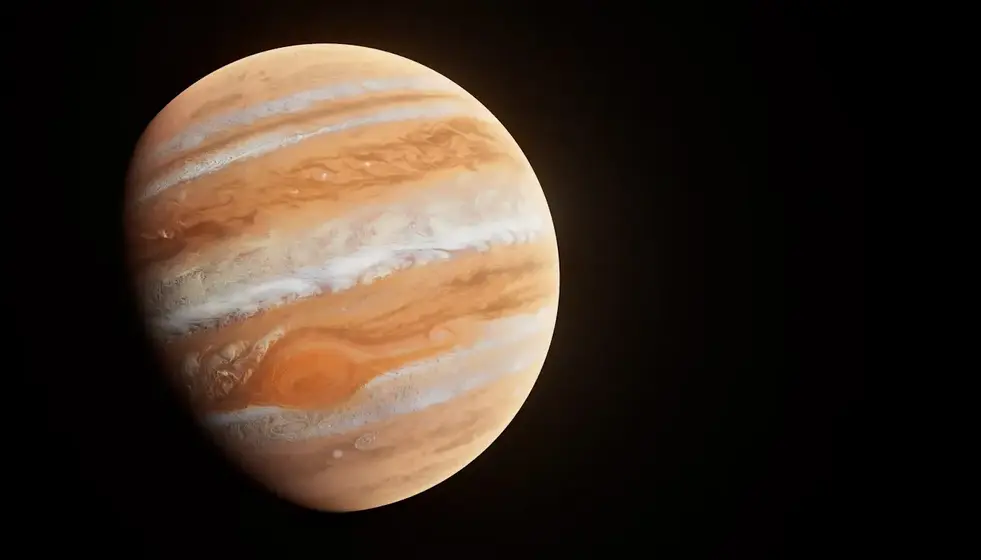
Jupiter is the largest of all the giant planets. It’s about 11 times wider than Earth and incredibly massive and active. Its atmosphere is home to powerful storms, including the famous Great Red Spot — a giant swirling storm that’s been raging for centuries.
Jupiter has over 100 known moons. The four biggest — Io, Europa, Ganymede, and Callisto — are called the Galilean moons. Ganymede is the largest moon in the entire Solar System — it’s even bigger than Mercury!
Jupiter’s magnetic field is incredibly powerful. It creates a strong radiation belt around the planet. And here’s something amazing — Jupiter acts like Earth’s bodyguard, pulling in asteroids that might otherwise crash into us.
Saturn — The Planet With Stunning Rings
Saturn is best known for its spectacular rings. They’re wide but super thin, made of ice, dust, and rocks — and they’re one of the most beautiful sights in the Solar System. Saturn is also a huge planet, but its density is low. If you could put it in water (just hypothetically), it would float!

One of Saturn’s most interesting moons is Titan, the second-largest moon in the Solar System. It has a thick atmosphere and even rivers and lakes — made of liquid methane, not water. Another fascinating moon is Enceladus. It shoots out plumes of water vapor, hinting at an ocean beneath its icy crust.
At Saturn’s north pole, there’s a strange hexagon-shaped storm — a giant, stable, six-sided weather pattern spinning around for years.
Uranus — The Planet That Spins on Its Side
Uranus is truly unique. Its axis is tilted so much that it practically rolls on its side as it orbits the Sun. That means its seasons are super long — each one lasts over 20 Earth years.

Uranus has a bluish color thanks to the methane in its atmosphere. It’s also one of the coldest planets in the Solar System.
The planet has rings too, but they’re dark and hard to see. Uranus has over 25 moons, and just like the planet itself, their orbits are tilted.
Neptune — The Farthest Giant Planet
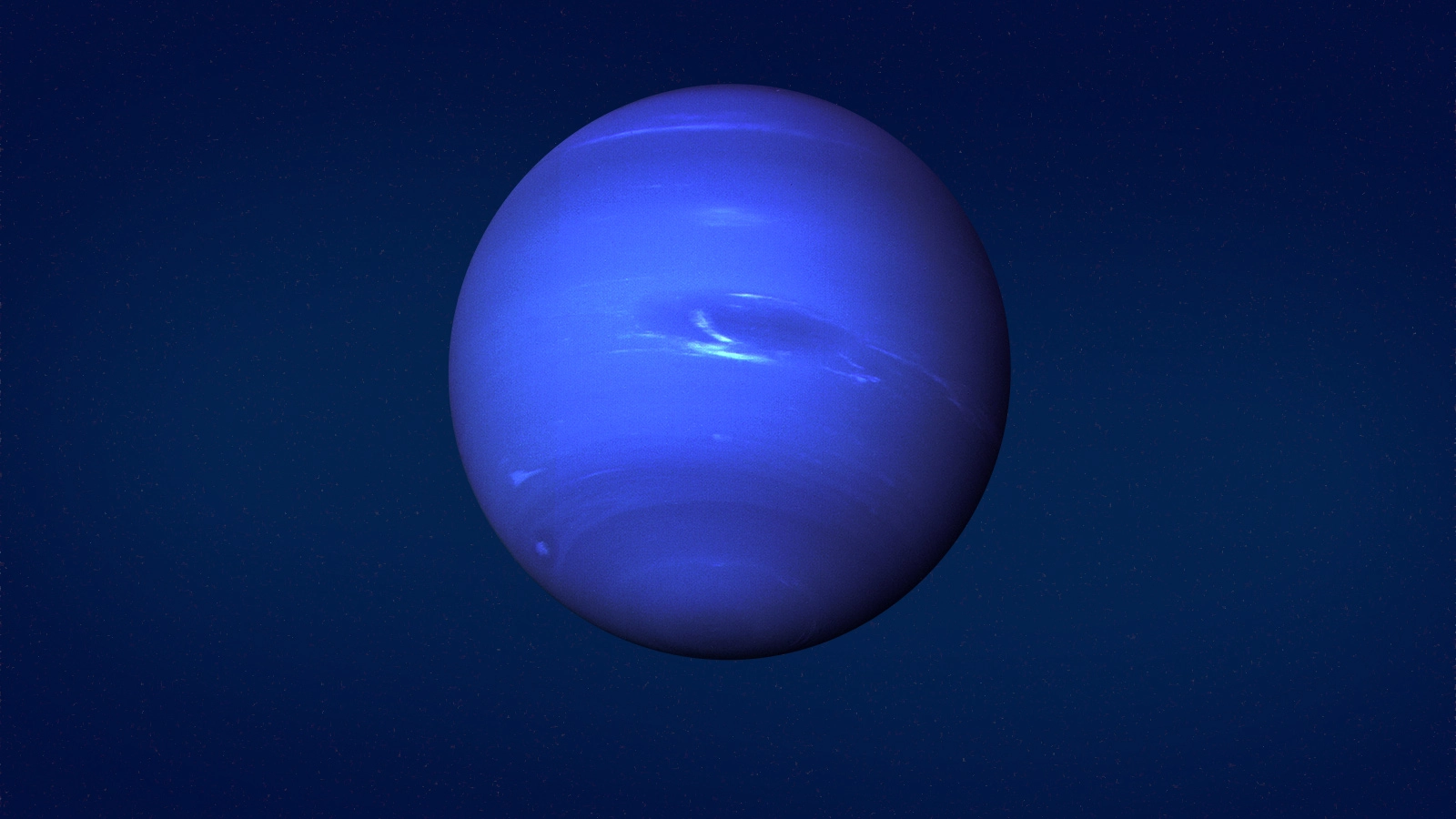
Neptune is the most distant planet from the Sun. Oddly enough, it’s warmer than Uranus because it gives off more heat from its interior. Neptune is very active, with constant storms swirling across its atmosphere.
Neptune holds the record for the fastest winds in the Solar System — up to 2,000 km/h (about 1,200 mph)!
Its biggest moon, Triton, orbits the planet in the opposite direction of Neptune’s spin. That’s a clue it might’ve been captured from somewhere else. Triton also shows signs of activity — possibly from underground heat.
What All Giant Planets Have in Common
None of the giant planets have a solid surface. They’re made of gases or frozen materials. Their atmospheres are deep and thick. Winds are fierce, and their magnetic fields are incredibly strong. All four have ring systems and lots of moons.
You may also like:
But there’s a big difference between them. Jupiter and Saturn are gas giants, mostly made of hydrogen and helium. Uranus and Neptune are called ice giants, with more water, methane, and ammonia inside. That gives them their bluish color and a different inner structure. Even though Uranus and Neptune have thinner atmospheres, they’re colder overall.
All four giants are massive, and their gravity affects everything in the Solar System. They help control the asteroid belt and influence the Kuiper Belt beyond Neptune.
Could Life Exist Near the Giant Planets?
Life probably couldn’t survive on the giant planets themselves — the pressure’s just too extreme, and there’s no solid ground to stand on. But their moons? That’s a different story.
- Europa (Jupiter’s moon): There’s likely a deep ocean beneath its icy surface. Even though it’s cold, internal heat might keep the water liquid — and possibly support life.
- Enceladus (Saturn’s moon): It sprays water vapor from cracks in its icy crust. That’s a strong sign of liquid water below.
- Titan (another Saturn moon): It has a dense atmosphere and lakes of liquid methane. It’s weird, but it’s still a liquid environment — and life might adapt to it in exotic ways.
Scientists are planning new missions to explore these moons. They might help us answer the big question: Are we alone in the universe?
Even though we’ve known about the giant planets for a long time, there’s still so much we don’t understand. Missions to Uranus and Neptune were quick flybys, and only Voyager 2 has seen them up close — back in the 1980s. Now, scientists are working on new missions to study their moons, oceans, and magnetic fields in more detail.
We still don’t fully know how these planets formed, why Uranus and Neptune are so different, or what’s hiding under their thick clouds.
With better technology, we’ll get closer to these giants. One day, we might even explore their moons up close — and who knows, maybe find tiny forms of life. Studying these planets also helps us understand planets in other star systems, since many exoplanets are similar to Jupiter or Neptune.
Video: The Giant Planets — Jupiter, Saturn, Uranus & Neptune
We still have so much to learn about the giant planets. They’re full of mysteries and draw the attention of scientists around the world. To learn more, check out this video:
Final Thoughts
Jupiter, Saturn, Uranus, and Neptune — each of them is one of a kind. These planets are giants not just in size, but in their impact on our cosmic neighborhood. Their storms, rings, magnetic fields, and moons are still full of mystery. They’re distant worlds — but definitely worth exploring. And maybe, just maybe, they’ll help us figure out if life exists beyond Earth.
Frequently Asked Questions
How Many Giant Planets Are There?
There are four giant planets in the Solar System — Jupiter, Saturn, Uranus, and Neptune. They’re the largest bodies orbiting the Sun.
What’s Special About Giant Planets?
They don’t have solid surfaces. They’re made of gas or ice, have ring systems, and lots of moons.
Which Planet Has 62 Moons?
Saturn has 62 confirmed moons. Some, like Titan, are huge. Others are tiny and barely visible.

 On the portal with 10.12.2023
 2 articles
 1388 переглядів
Table of contents







You may be interested:

The questions you can ask a guy when communicating can be different. The main thing is that they are suitable for a c...
 September 6, 2026
  141.0 K
Dumbbell exercises for men — 65 moves to train every muscle group at home or in the gym. This guide covers shoulders,...
July 3, 2026 32.8 K
Want to find someone online by their full name? This guide shows how to use a true people search finder – from social...
June 27, 2025 20.3 K
Turkish TV series (Turkish dizis) have become a global phenomenon — romance, family drama and crime stories with high...
September 6, 2026 16.1 K
Explore 110 authentic compliments to make a girl feel special. Find tips and phrases to compliment a girl naturally a...
July 1, 2025 14.8 K
NFTs aren’t just a trend–they’re a new way to prove ownership online. This guide breaks down what NFTs are, how they ...
July 3, 2026 10.4 K
Looking for the perfect words to add to your photo album? We’ve gathered over 70 captions for photo albums–funny, emo...
July 3, 2025 7.5 K
Today, many amateur gardeners are interested in planting blueberries and growing tall blueberries. Its delicious berr...
February 8, 2024 6.5 K
Looking to boost your income without leaving the house? From freelance gigs to content creation, this guide reveals 1...
September 6, 2026 5.6 K
Most Ukrainians have likely held euros, the currency of the Eurozone, in their hands. Everyone notices their bright c...
August 22, 2024 5.6 K⚠️ This platform does not have a Ukrainian license. The link is provided for informational purposes only. Participation in games on such sites may violate Ukrainian law.