

Home BusinessCryptocurrencyHow Bitcoin and Ethereum Are Different: Features, Investment Appeal, and More
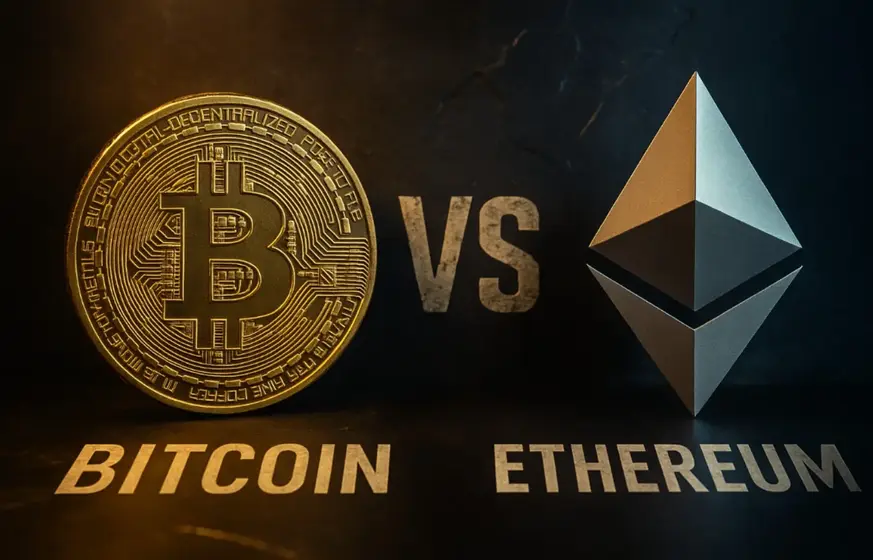
BusinessCryptocurrencyHow Bitcoin and Ethereum Are Different: Features, Investment Appeal, and MoreBusinessCryptocurrencyHow Bitcoin and Ethereum Are Different: Features, Investment Appeal, and MoreBitcoin and Ethereum are the two most well-known cryptocurrencies. Both run on blockchain technology, meaning they operate without central control—no banks, no governments. Everything is decentralized and automated. While the two share some similarities, they were built for different purposes. Bitcoin was created to be digital money. Ethereum goes a step further—it’s a platform for building apps and services on the blockchain. This article offers a straightforward comparison of Bitcoin vs. Ethereum, covering the basics: functionality, speed, use cases, and investment potential.
Bitcoin came first, launched in 2009 by an unknown creator using the pseudonym Satoshi Nakamoto. The goal? To create a new form of money—independent, decentralized, and peer-to-peer.
Bitcoin is designed to store and transfer value online. Think of it as digital gold. Its supply is limited, and its value has historically risen over time.
Ethereum arrived later, in 2015, invented by Vitalik Buterin. Buterin had a different vision: not just money, but a smart network. Ethereum allows developers to build decentralized applications (dApps) right on the blockchain. These apps run automatically, without middlemen. That makes Ethereum a platform for services like finance apps, games, voting systems, and NFTs.
Both Bitcoin and Ethereum use blockchain tech, but they operate differently under the hood.
Transaction verification:
Network capabilities:
Supply:
Bitcoin is a digital currency. Its primary job is to transfer value. It’s often called “digital gold” because it’s secure, scarce, and stable—but limited in features.
Ethereum is more than just a currency. It has a built-in system for smart contracts—automated programs that run when certain conditions are met. For example, you could create an app that automatically executes an agreement when both parties meet the terms. This is a core difference in the Bitcoin vs. Ethereum debate: one is money, the other is money and a platform for building decentralized apps.

To send crypto from one wallet to another, the network needs to validate the transaction. This is done by creating new blocks on the blockchain, each containing a group of confirmed transactions.
And that’s not all. Ethereum also uses Layer 2 solutions—extra layers that sit on top of the main blockchain. They help by:
One of the clearest differences between BTC and ETH is how they’re used. Each has its own main purpose.
Bitcoin is mostly used to:
Ethereum is used to:
Sure, Ethereum can be used as digital money too. But its strength lies in what it enables developers to build. Bitcoin, meanwhile, sticks to its core mission: securely transferring value.

You may also like:
For many people, cryptocurrencies aren’t just tech—they’re also investment opportunities. And here, too, the two coins take different paths.
Bitcoin:
Ethereum:
In short:
You can invest in both. They’re both promising, relatively predictable, and show upward trends. But always consider your risk tolerance. And remember: crypto isn’t guaranteed income. It’s a highly volatile asset.
Still wondering about the difference between BTC and ETH? Watch this short video to get a clear overview:
Bitcoin and Ethereum belong to two different worlds. They don’t directly compete—they complement each other. The better choice depends on your goals. Some people want a safe, long-term store of value. Others are more interested in cutting-edge tech and new ways to build apps and systems. The key is understanding that crypto isn’t just a trend. It’s a tool. How you use it—that’s entirely up to you.
That depends on your goal. Bitcoin is more stable and less risky. Ethereum offers more possibilities, but with more price swings.
In terms of technology—yes, because it has more features. But in popularity and market cap, Bitcoin still leads. Ethereum is catching up, but it’s a long-term process.
Ethereum, Solana, or emerging projects in AI have high potential. But the crypto market is unpredictable. Invest with caution.

 On the portal with 25.06.2023
 75 articles
 322355 переглядів

The questions you can ask a guy when communicating can be different. The main thing is that they are suitable for a c...
 September 6, 2026
  141.0 K
Dumbbell exercises for men — 65 moves to train every muscle group at home or in the gym. This guide covers shoulders,...
July 3, 2026 32.8 K
Want to find someone online by their full name? This guide shows how to use a true people search finder – from social...
June 27, 2025 20.3 K
Turkish TV series (Turkish dizis) have become a global phenomenon — romance, family drama and crime stories with high...
September 6, 2026 16.1 K
Explore 110 authentic compliments to make a girl feel special. Find tips and phrases to compliment a girl naturally a...
July 1, 2025 14.8 K
NFTs aren’t just a trend–they’re a new way to prove ownership online. This guide breaks down what NFTs are, how they ...
July 3, 2026 10.4 K
Looking for the perfect words to add to your photo album? We’ve gathered over 70 captions for photo albums–funny, emo...
July 3, 2025 7.5 K
Today, many amateur gardeners are interested in planting blueberries and growing tall blueberries. Its delicious berr...
February 8, 2024 6.5 K
Looking to boost your income without leaving the house? From freelance gigs to content creation, this guide reveals 1...
September 6, 2026 5.6 K
Most Ukrainians have likely held euros, the currency of the Eurozone, in their hands. Everyone notices their bright c...
August 22, 2024 5.6 KExpert recommendations and exclusive offers in your inbox.
This section contains information about gambling and is available only to persons who are 21 years of age or older in accordance with the applicable laws of Ukraine. Please confirm that you are 21 years of age or older.
This platform does not have a Ukrainian license. The link is provided for informational purposes only. Participation in games on such sites may violate Ukrainian law.