

Home  HealthSports and fitnessHow to Hold a Plank, How Long to Do It, and What Changes You’ll Notice in 30 Days
HealthSports and fitnessHow to Hold a Plank, How Long to Do It, and What Changes You’ll Notice in 30 Days HealthSports and fitnessHow to Hold a Plank, How Long to Do It, and What Changes You’ll Notice in 30 Days The plank is one of the most effective — and simplest — exercises out there. You don’t need any special equipment or much time. It’s become a favorite among fitness lovers around the world because it tones the body quickly and visibly. But to get results without risking injury, you need to know how to do it properly and how long to hold it.
A plank is a static exercise where your body stays in a straight line while you support yourself on your hands or forearms. It activates the deep core muscles — abs, back, shoulders, glutes, and even legs. These muscles help stabilize your spine, improve posture, and support your balance. That’s why the plank is often recommended not just for ab training, but also to relieve back pain and boost overall well-being.
That said, like any exercise, the plank isn’t for everyone. If you have lower back issues, a hernia, shoulder problems, or are recovering from surgery, it’s best to check with a doctor first. Pregnant women are usually advised to avoid the classic plank, but a specialist can recommend safe alternatives.
And here’s the fun part — the plank isn’t just one boring pose. There are dozens of variations, each working your body in a new way. Think planks are dull? You probably just haven’t tried them all yet. But let’s start with the basics.
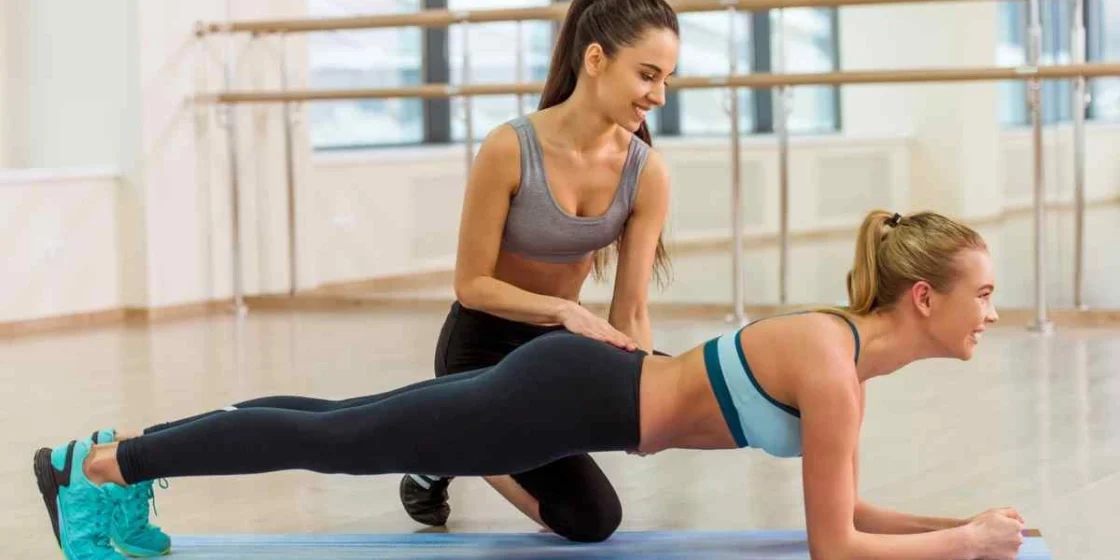
This is the standard version and a great place to start. Lie on your stomach, then lift up onto your forearms — elbows directly under your shoulders, arms parallel. Legs are extended behind you, and you’re on your toes. Your weight is supported by your forearms and feet. Keep your core tight and your back straight. This version puts less pressure on the wrists, making it ideal if your hands are sensitive or if you’re new to planking.
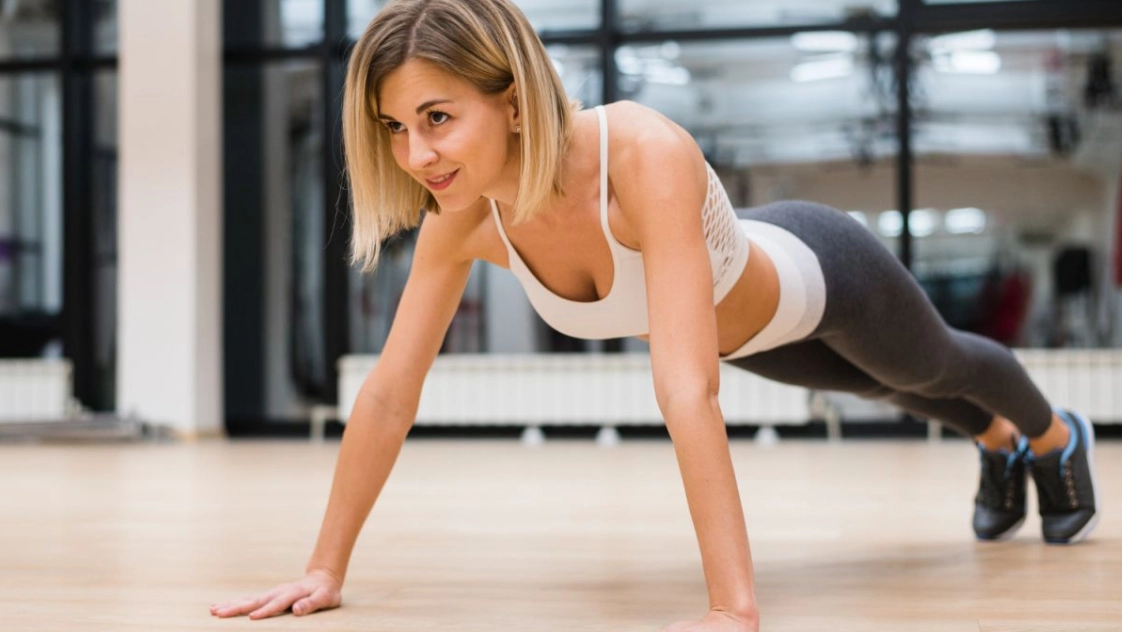
This version looks like the starting position for a push-up. Hands are flat on the floor, directly under your shoulders. It puts more pressure on your shoulders, arms, and chest — but still works the core hard. Try this if you want to strengthen your upper body while training your abs, or if you’re building up to push-ups.
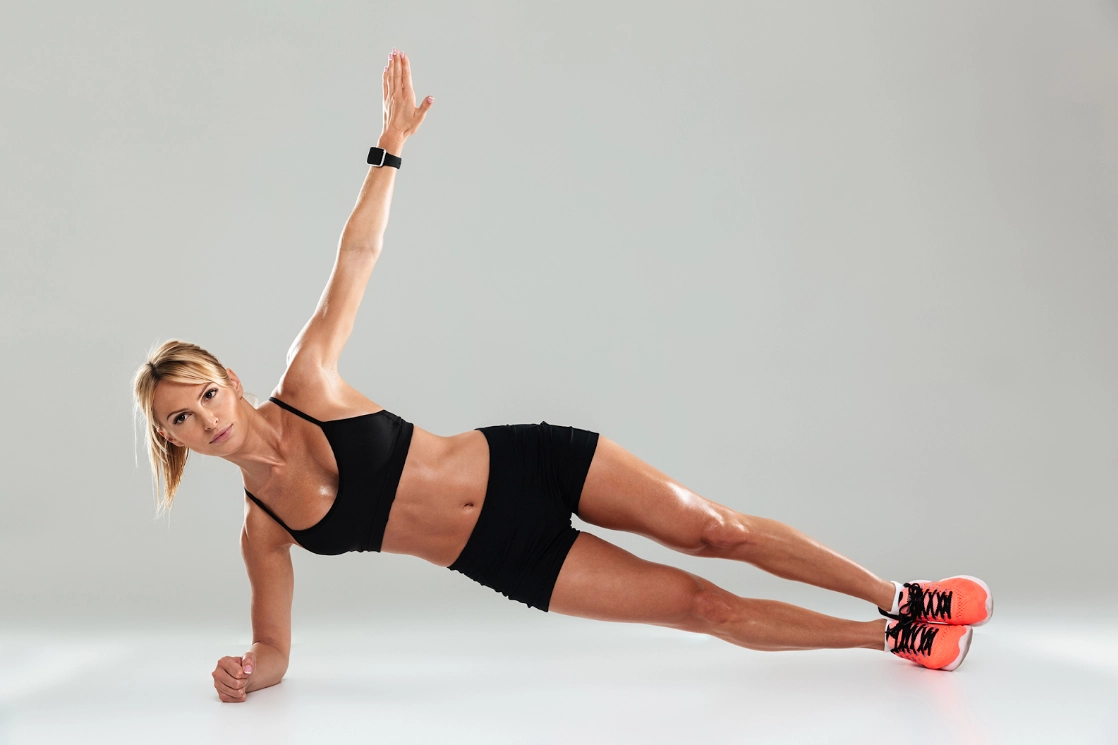
This variation shifts the focus to your obliques. Support yourself on one forearm (or straight arm) with your body turned to the side. Legs are stacked, one on top of the other. The top arm can be raised or rest along your side.
Side planks challenge your balance, train deep stabilizer muscles, and help tighten your waist — right where stubborn fat tends to sit.
Once you’ve nailed the basic plank, take it up a notch by adding asymmetry. Try lifting one arm or leg at a time while keeping your balance. This forces deeper muscles to engage because your body has to work harder to stay steady. It’s a great way to intensify the workout, especially for your core and back.
Who says planks have to be still? Add movement to ramp things up. Try switching from forearms to hands (“plank up-downs”), pulling your knees to your chest (“mountain climbers”), tapping your shoulders with the opposite hand, or even slowly “walking” sideways in plank position. These versions combine the benefits of the plank with cardio and are perfect if you’re craving a higher-intensity session.
Technique is everything. Here’s what to watch for:
Simple rule: it’s better to plank for 20 seconds with perfect form than 2 minutes with a collapsed back. Pay extra attention if you sit all day — your spine already takes a lot of strain.
Watch this video for step-by-step instructions and form tips:
Doing a plank daily — with good form — can bring noticeable changes in just 30 days:
Even after a week, many people notice they stand straighter and feel more “solid” in their body. By week two, your lower back might feel less stiff (especially if you sit a lot), and your abs may start to show more shape. Week three brings better endurance. By the end of the month, your body feels stronger, steadier, and more in control.
Want better results at home? Add resistance band exercises to your routine!
You may also like:
Start small — 20 to 30 seconds is perfect for beginners. Then add 10–15 seconds each week, depending on how you feel. Most experts recommend aiming for 1–2 minutes per set. It’s actually better to do two 1-minute sets with good form than a shaky 3-minute plank. Here’s a simple guide:
Another option: interval planking — for example, 3×40 seconds with short breaks. You’ll still get all the benefits without burning out.
The plank is perfect for anyone who wants maximum results in minimal time. No gym, no gear, not even a mat (though it’s more comfy with one).
Just a few minutes a day can make your body stronger, more toned, and more balanced. But the golden rule? Listen to your body. Planking isn’t about battling a stopwatch — it’s about building a connection with your body and treating it with care.
You don’t need to hold it for minutes on end. Start with 20–30 seconds and focus on good form. Over time, work your way up to 1–2 minutes. The key is consistency — planking every day for a minute is more effective than five minutes once a week.
Both are great! Forearm planks are easier on the wrists and target deep core muscles. High planks work more on your shoulders, arms, and chest. If you want full-body strength, alternate between the two.
Most likely, it’s a form issue. If your hips sag and your core isn’t tight, your back takes the strain. Keep your abs engaged, glutes slightly squeezed, and spine straight. If pain continues, consult a pro.
Planks strengthen your abs, especially the deep muscles that pull your belly in — but they don’t burn fat directly. For visible abs, combine planks with full-body workouts, healthy eating, and an active lifestyle. Still, as part of a balanced routine, planks definitely help shape your waistline.

 On the portal with 25.06.2023
  75 articles
  311208 переглядів

The questions you can ask a guy when communicating can be different. The main thing is that they are suitable for a c...
 April 8, 2024
  140.8 K
Standing up straight, grip the dumbbells with a neutral grip and bring your hands down in front of your hips. Bend yo...
 August 5, 2023 32.6 K
Want to find someone online by their full name? This guide shows how to use a true people search finder – from social...
June 27, 2025 20.1 K
Turkish TV series have won the hearts of millions of viewers around the world by offering exciting plots, deep emotio...
April 8, 2024 15.7 K
Explore 110 authentic compliments to make a girl feel special. Find tips and phrases to compliment a girl naturally a...
July 1, 2025 14.5 K
NFTs aren’t just a trend–they’re a new way to prove ownership online. This guide breaks down what NFTs are, how they ...
July 2, 2025 10.2 K
Looking for the perfect words to add to your photo album? We’ve gathered over 70 captions for photo albums–funny, emo...
July 3, 2025 7.2 K
Today, many amateur gardeners are interested in planting blueberries and growing tall blueberries. Its delicious berr...
February 8, 2024 6.3 K
Looking to boost your income without leaving the house? From freelance gigs to content creation, this guide reveals 1...
July 4, 2025 5.5 K
Strength training at home can be done with resistance bands. They provide a functional alternative to deadlifts, squa...
August 5, 2023 5.1 KExpert recommendations and exclusive offers in your inbox.
This section contains information about gambling and is available only to persons who are 21 years of age or older in accordance with the applicable laws of Ukraine. Please confirm that you are 21 years of age or older.
This platform does not have a Ukrainian license. The link is provided for informational purposes only. Participation in games on such sites may violate Ukrainian law.