


Often searched for:
- Як варити яйця правильно: всмятку, в круту – дієві поради для смачного приготування
- Як вибрати якісний вологий корм для котів?
- Сумісність знаків зодіаку – детальний опис та тест на сумісність
- Вітаміни та мікроелементи для підтримання імунітету
- Де знайти вірш про маму? Красиві й щирі рядки сучасних віршів українською


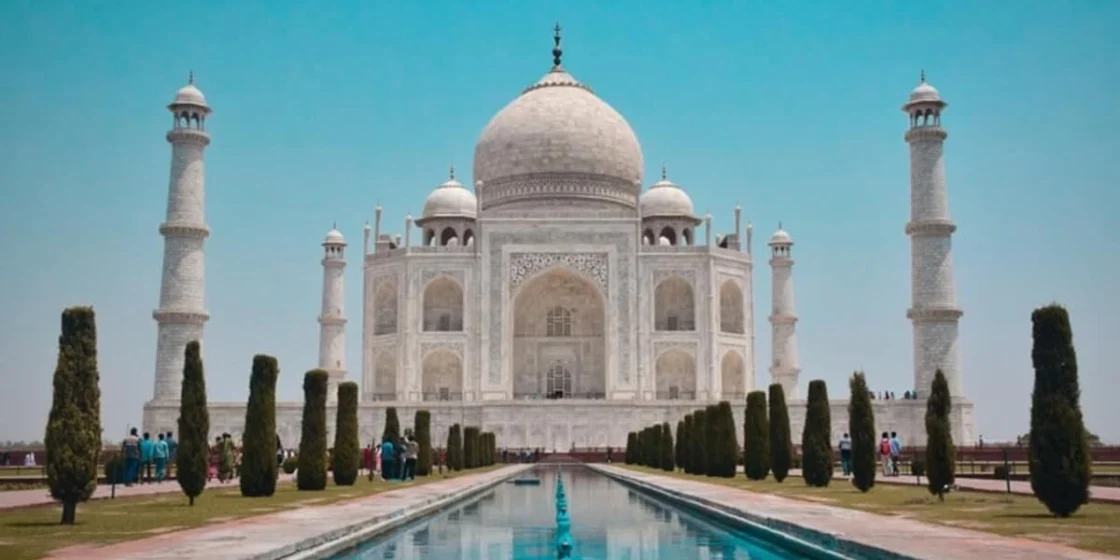
The Taj Mahal is India’s most iconic cultural monument and one of the Seven Wonders of the World. A symbol of eternal love, it captivates with its beauty, story, and mystery. Located in Agra, in the Indian state of Uttar Pradesh, this white marble mausoleum draws millions of visitors from around the globe each year. In 1983, it was recognized as a UNESCO World Heritage Site, and ever since, it has remained one of the world’s most celebrated landmarks.
What Is the Taj Mahal?
The Taj Mahal is a mausoleum built by Mughal Emperor Shah Jahan in the 17th century in memory of his beloved wife Mumtaz Mahal, who died during childbirth. The monument blends Islamic, Persian, Indian, and even Turkish architectural styles. Its main structure is made of white marble that changes color depending on the time of day—pink at sunrise, pure white in the afternoon, and golden in the moonlight.
The Grand History Behind the Taj Mahal
The story of the Taj Mahal begins with Shah Jahan’s deep love for Mumtaz Mahal (born Arjumand Banu Begum). They married in 1612, and she became his closest confidante. She accompanied him even during military campaigns and held influence at court.
In 1631, Mumtaz died while giving birth to their 14th child in the city of Burhanpur. Devastated, Shah Jahan promised to honor her with a monument to their love.
Construction began in 1632 and lasted over 20 years. Around 20,000 workers, architects, and artisans from across Asia took part. The lead architect is believed to have been Ustad Ahmad Lahauri. More than a thousand elephants were used to transport materials, including white marble from Makrana (Rajasthan) and precious stones from China, Tibet, Sri Lanka, and Afghanistan.
Shah Jahan was later buried next to Mumtaz Mahal—their tombs lie in a crypt beneath the main dome.
This is more than just history—it’s a timeless tale of love, loss, and artistic brilliance.
What Is the Taj Mahal Made Of?
The Taj Mahal is a masterpiece of symmetry, detail, and inspiration. Its design combines Indian traditions with Islamic architectural harmony.
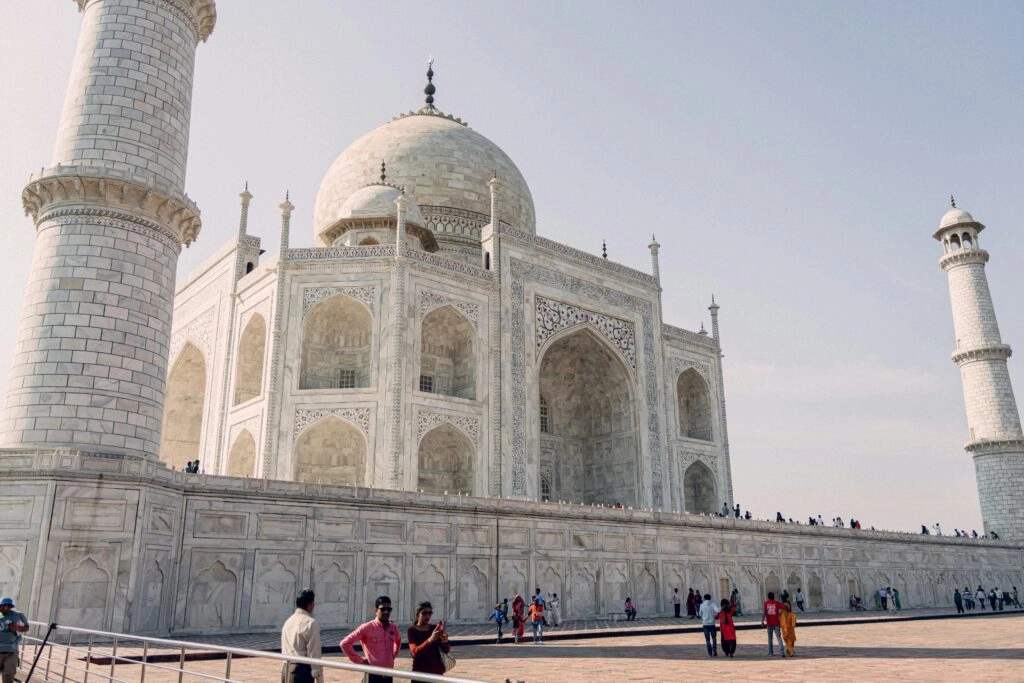
Key architectural features:
- The Mausoleum – The central white marble structure with a 35-meter-high dome visible from afar.
- Minarets – Four 40-meter towers at each corner, slightly tilted outward to prevent collapse onto the mausoleum in case of an earthquake.
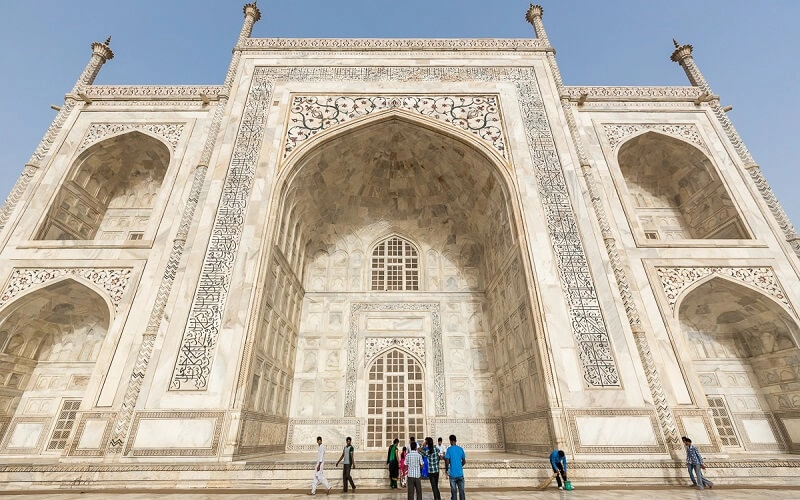
- Stone Inlay – Ornamental designs embedded with precious and semi-precious stones like turquoise, carnelian, amethyst, jasper, and jade.
- Charbagh Garden – Divided into four parts, representing the Islamic vision of paradise.
- Water Features – Reflecting pools and fountains create a mirror-like effect of the mausoleum.
From dome to garden, every detail of the Taj Mahal speaks of divine balance and the timeless nature of beauty.
What to See at the Taj Mahal
The Taj Mahal complex includes several must-see spots:
- The Central Mausoleum – The heart of the complex, housing the symbolic tombs of Shah Jahan and Mumtaz Mahal.
- Main Gate (Darwaza) – Massive red sandstone gates with Quranic calligraphy, offering a dramatic first view of the mausoleum.
- The Mosque – A red structure to the left, still used for Friday prayers.
- Guest Pavilion – A mirror-image building to the right, likely used to host pilgrims.
- Gardens and Canals – A perfectly symmetrical layout of water channels and fountains that create a tranquil, reflective setting.
Seeing the Taj Mahal at sunrise or by full moon is one of those unforgettable moments that stay with you forever.
5 Fascinating Facts About the Taj Mahal
The Taj Mahal has no shortage of legends and stories that add to its allure.
- The Black Taj Mahal Legend – Shah Jahan reportedly dreamed of building a matching black marble mausoleum across the Yamuna River, but his son stopped him.
- Banned from Recreating It – It’s said Shah Jahan ordered the hands of craftsmen to be cut off or blinded to ensure no one could ever build anything like it again (though this isn’t historically confirmed).
- Tilted Minarets – Engineered to lean slightly outward so they wouldn’t fall onto the main structure in an earthquake.
- Changing Colors – The white marble reacts to light, shifting from soft pink to pearly white to silvery hues.
- Endangered Beauty – Since the 2000s, efforts to preserve the facade have increased due to pollution and climate change threats.
The Taj Mahal Today
Today, the Taj Mahal remains a powerful cultural and tourist symbol of India—and a living piece of history. The Indian government actively maintains the site, restoring architectural elements, limiting daily visitor numbers, reducing pollution, and introducing new eco-friendly initiatives.
In the 2020s, new viewing platforms, electric shuttles, and audio guides were added to enhance the visitor experience.
The Taj Mahal Through a Traveler’s Eyes – Video
Watch this video to see the Taj Mahal through the eyes of real travelers. No filters—just the raw beauty of the monument.
The Taj Mahal is history carved in stone. It’s a place where time seems to pause, reminding us of the power of love, the sorrow of loss, and the pursuit of beauty. If you’re looking for a destination that truly takes your breath away—put the Taj Mahal on your list.
Frequently Asked Questions
Are there really “secret rooms” inside the Taj Mahal?
Yes, there are sealed or inaccessible spaces beneath the main platform. Some may be used for ventilation or technical needs, but researchers believe others may have served ritual or construction purposes. In 2022, public debate in India flared when politicians demanded that these rooms be opened for inspection.
Are there any architectural flaws in the Taj Mahal?
Despite its precision, there is one notable irregularity: Shah Jahan’s tomb is placed off-center, to the right of Mumtaz Mahal’s. This breaks the overall symmetry, likely because the mausoleum was initially meant only for Mumtaz, and Shah Jahan was buried there later after being overthrown and imprisoned by his son.
Is the mosque in the Taj Mahal complex still used?
Yes. While the complex is a major tourist site, the mosque remains active. On Fridays, only Muslims are allowed entry for prayers. On other days, it’s open to all visitors, maintaining both cultural and religious significance.
Why is photography not allowed inside the mausoleum?
Photography is banned inside the main mausoleum to protect its sacred atmosphere and the delicate marble inlays from light damage. The ban also helps preserve a sense of quiet and reverence within the space.

 On the portal with 25.06.2023
  75 articles
  311238 переглядів
 Table of contents 
You may be interested:

The questions you can ask a guy when communicating can be different. The main thing is that they are suitable for a c...
 April 8, 2024
  140.8 K
Standing up straight, grip the dumbbells with a neutral grip and bring your hands down in front of your hips. Bend yo...
 August 5, 2023 32.6 K
Want to find someone online by their full name? This guide shows how to use a true people search finder – from social...
June 27, 2025 20.1 K
Turkish TV series have won the hearts of millions of viewers around the world by offering exciting plots, deep emotio...
April 8, 2024 15.7 K
Explore 110 authentic compliments to make a girl feel special. Find tips and phrases to compliment a girl naturally a...
July 1, 2025 14.5 K
NFTs aren’t just a trend–they’re a new way to prove ownership online. This guide breaks down what NFTs are, how they ...
July 2, 2025 10.2 K
Looking for the perfect words to add to your photo album? We’ve gathered over 70 captions for photo albums–funny, emo...
July 3, 2025 7.2 K
Today, many amateur gardeners are interested in planting blueberries and growing tall blueberries. Its delicious berr...
February 8, 2024 6.3 K
Looking to boost your income without leaving the house? From freelance gigs to content creation, this guide reveals 1...
July 4, 2025 5.5 K
Strength training at home can be done with resistance bands. They provide a functional alternative to deadlifts, squa...
August 5, 2023 5.1 K⚠️ This platform does not have a Ukrainian license. The link is provided for informational purposes only. Participation in games on such sites may violate Ukrainian law.
Expert recommendations and exclusive offers in your inbox.
Expert recommendations and exclusive offers in your inbox.
Access only for persons over 21 years of age
This section contains information about gambling and is available only to persons who are 21 years of age or older in accordance with the applicable laws of Ukraine. Please confirm that you are 21 years of age or older.
This platform does not have a Ukrainian license. The link is provided for informational purposes only. Participation in games on such sites may violate Ukrainian law.