

Home  HealthSports and fitnessRebounding and Calorie Burn: How Much Can You Really Lose in an Hour?
HealthSports and fitnessRebounding and Calorie Burn: How Much Can You Really Lose in an Hour? HealthSports and fitnessRebounding and Calorie Burn: How Much Can You Really Lose in an Hour? Rebounding is a cardio workout done on a mini trampoline. Thanks to its active jumps, rhythmic moves, and nonstop muscle engagement, it’s become a go-to for people who want fast results without putting stress on their joints. Originally from Europe, this fitness trend took off quickly worldwide—and for good reason. It delivers everything a modern person wants: intensity, emotional release, joint-friendly movement, and results you can see in just 3–4 weeks of regular classes. Compared to treadmills, dumbbells, or repetitive gym routines, rebounding feels more like play than a chore.
In a one-hour rebounding session, you can burn between 400 and 800 calories—which is on par with intense running or CrossFit. The exact number depends on several factors: your weight, workout pace, fitness level, and the type of class.
The harder you move, the more calories you burn. For example, a person weighing 155 lbs (70 kg) will burn around 500 calories during a moderate-paced session. If you weigh more or go all-in with high-intensity jumps, you could reach 700–800 calories per hour. That makes rebounding one of the most efficient cardio options out there. For comparison:
And that’s not all—your body keeps burning calories even after the workout ends, as it recovers and rebuilds.
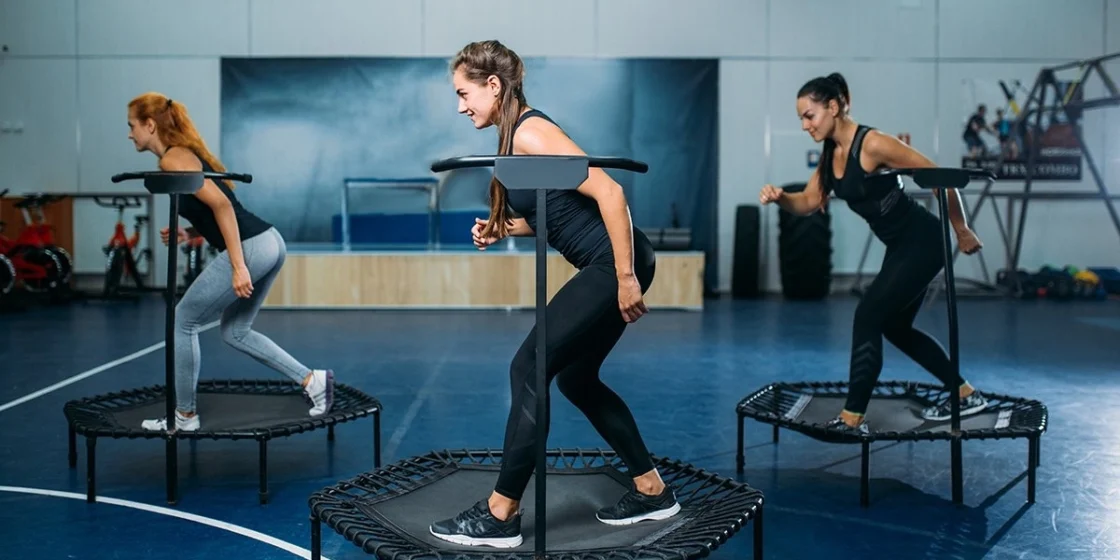
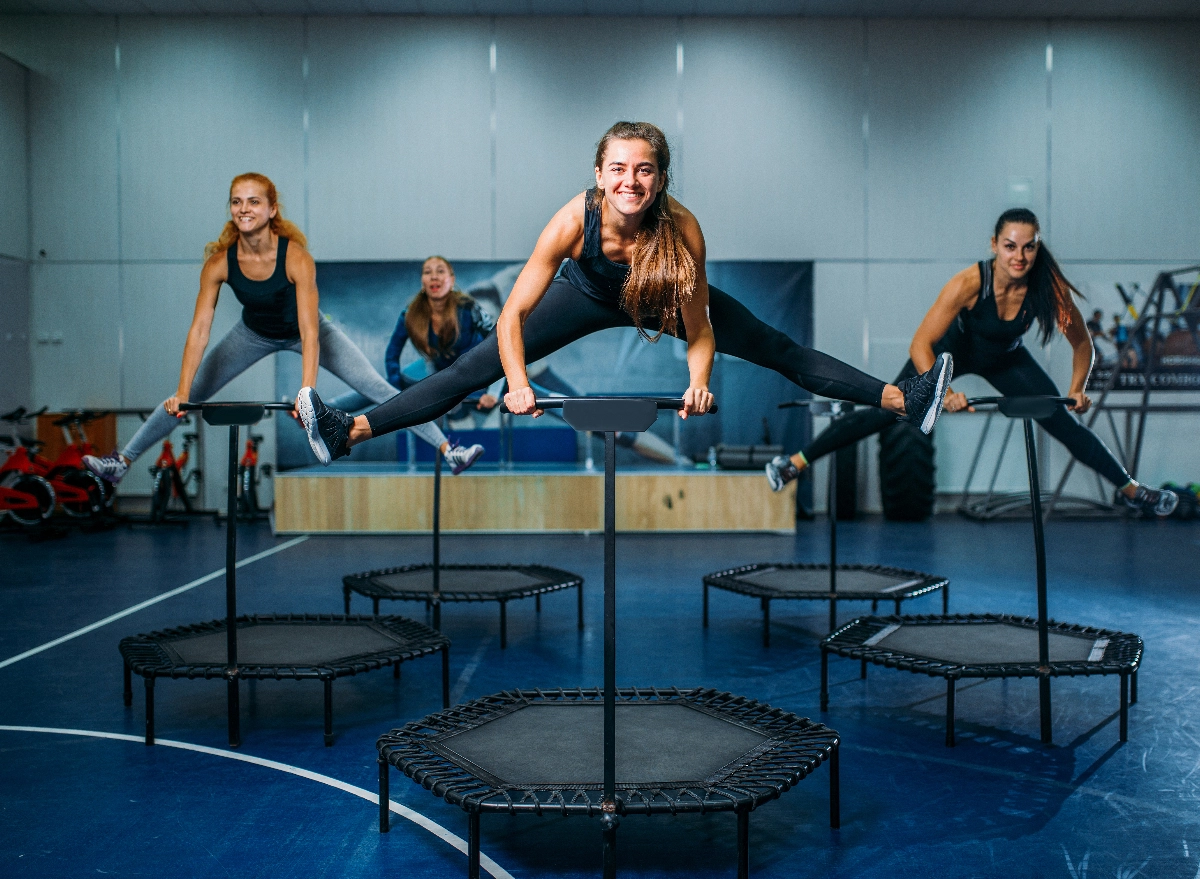
Rebounding is a workout done on a mini trampoline with a handlebar, set to upbeat music and often includes aerobic elements. It mixes cardio, strength, and coordination in one session. The big advantage? Shock absorption—unlike running, trampoline workouts don’t put pressure on your joints.
This fitness style came from the Czech Republic. Back in 2001, Czech instructors created it as a fun and safe way to lose weight. Today, it’s a full-blown trend in studios across Europe.
Why do people love it so much?
A lot of people who can’t run or lift weights due to back or knee issues turn to rebounding—and they don’t look back.
Rebounding taps into multiple energy systems and activates nearly every major muscle group. You’re not just jumping—you’re working your arms, core, legs, and back. And the energetic music keeps you going.
Here’s what affects calorie burn:
Rebounding also triggers the afterburn effect—your body keeps using up energy for 12–24 hours after a session, especially if the class includes strength exercises or interval bursts.
According to the American Council on Exercise (ACE), participants burned an average of 240–420 calories during a 30-minute session, depending on body weight and pace. That puts rebounding right up there with HIIT and stationary biking.
Beyond blasting calories, rebounding comes with a bunch of other perks:
You may also like:
Many people choose it not just to lose weight, but for how great they feel afterward. It’s energizing—like a shot of espresso—and gives your brain a break from stress. Plus, it’s low-maintenance: no pricey gear or machines needed. Just a trampoline and some motivation.
Even though rebounding is considered low-impact, it’s not for everyone. In certain cases, it’s best to check with your doctor first.
Be cautious with jumping if you have:
Also, kids under 6 and older adults without supervision should avoid tricky moves. But with the right program, even seniors can join in with lower-impact routines.
Getting started is easy—even if you’ve never worked out before. Here’s what you’ll need:
Start with 30-minute sessions 2–3 times a week. In just a month, you’ll likely notice more energy, better mood, and a slimmer shape.
The key? Don’t overdo it. If you’re winded or dizzy, pause. Rebounding should feel good—not like a punishment.
Curious about rebounding? It’s a fun, effective way to work out. Watch this video to see the benefits in action:
Should you try rebounding? Absolutely—if you want to burn calories, lose weight, and enjoy your workouts. It’s a full-body routine that helps you:
It’s not magic—but it’s pretty close. When paired with healthy eating and consistency, it delivers serious results. People often notice changes in their body, stamina, sleep, and stress levels in just 2–3 months. If you’re looking for something new, fun, and super effective—give bouncing a shot.
You can burn between 400 and 800 calories per hour, depending on your weight and how intense the workout is. The more you move, the more you burn.
Rebounding helps tone muscles and lose weight without heavy strain. It works great for the core, thighs, and glutes—and it’s also a mood booster and stress reliever.
It improves heart and lung health, builds balance, endurance, and coordination, and puts less stress on your joints compared to running.

 On the portal with 25.06.2023
  75 articles
  311240 переглядів

The questions you can ask a guy when communicating can be different. The main thing is that they are suitable for a c...
 April 8, 2024
  140.8 K
Standing up straight, grip the dumbbells with a neutral grip and bring your hands down in front of your hips. Bend yo...
 August 5, 2023 32.6 K
Want to find someone online by their full name? This guide shows how to use a true people search finder – from social...
June 27, 2025 20.1 K
Turkish TV series have won the hearts of millions of viewers around the world by offering exciting plots, deep emotio...
April 8, 2024 15.7 K
Explore 110 authentic compliments to make a girl feel special. Find tips and phrases to compliment a girl naturally a...
July 1, 2025 14.5 K
NFTs aren’t just a trend–they’re a new way to prove ownership online. This guide breaks down what NFTs are, how they ...
July 2, 2025 10.2 K
Looking for the perfect words to add to your photo album? We’ve gathered over 70 captions for photo albums–funny, emo...
July 3, 2025 7.2 K
Today, many amateur gardeners are interested in planting blueberries and growing tall blueberries. Its delicious berr...
February 8, 2024 6.3 K
Looking to boost your income without leaving the house? From freelance gigs to content creation, this guide reveals 1...
July 4, 2025 5.5 K
Strength training at home can be done with resistance bands. They provide a functional alternative to deadlifts, squa...
August 5, 2023 5.1 KExpert recommendations and exclusive offers in your inbox.
This section contains information about gambling and is available only to persons who are 21 years of age or older in accordance with the applicable laws of Ukraine. Please confirm that you are 21 years of age or older.
This platform does not have a Ukrainian license. The link is provided for informational purposes only. Participation in games on such sites may violate Ukrainian law.